
ADVERTISEMENT
One traveler moved to Alaska and took nine long red-eye flights in only seven months. Many flights to the lower 48 leave overnight, so planning can make a big difference.
A red-eye usually leaves after 9 p.m. and arrives early the next morning. It can save daytime hours and one hotel night, but poor sleep may leave you too tired to enjoy either. Use these red eye flight sleep tips to rest and begin the day feeling ready.
Key Takeaways
- Shift your sleep schedule a little before departure.
- Pack an eye mask, earplugs, and a warm layer.
- Choose a seat with fewer interruptions when you can.
- Keep your meal light and limit caffeine and alcohol.
- Make time to wake up before you reach your destination.
Adjust your sleep schedule before the red-eye flight
A small change before takeoff can make resting on the plane easier. It supports circadian rhythm adjustment and helps your body settle into the destination’s time zone.
ADVERTISEMENT
Shift bedtime gradually
Start matching your destination’s schedule the day before you fly. On a Los Angeles-to-New York trip, go to bed and wake up about an hour earlier.
Skip a daytime nap right before boarding if it could delay your usual sleep window. A nap at a suitable time can reduce fatigue without disrupting your body clock, supporting jet lag prevention.
Protect your sleep the night before
Get a full night of rest before travel, and follow a routine your body knows. Brush your teeth before boarding, or use a facial wipe after takeoff to signal that it is time to wind down.
Pack a compact sleep kit for the cabin
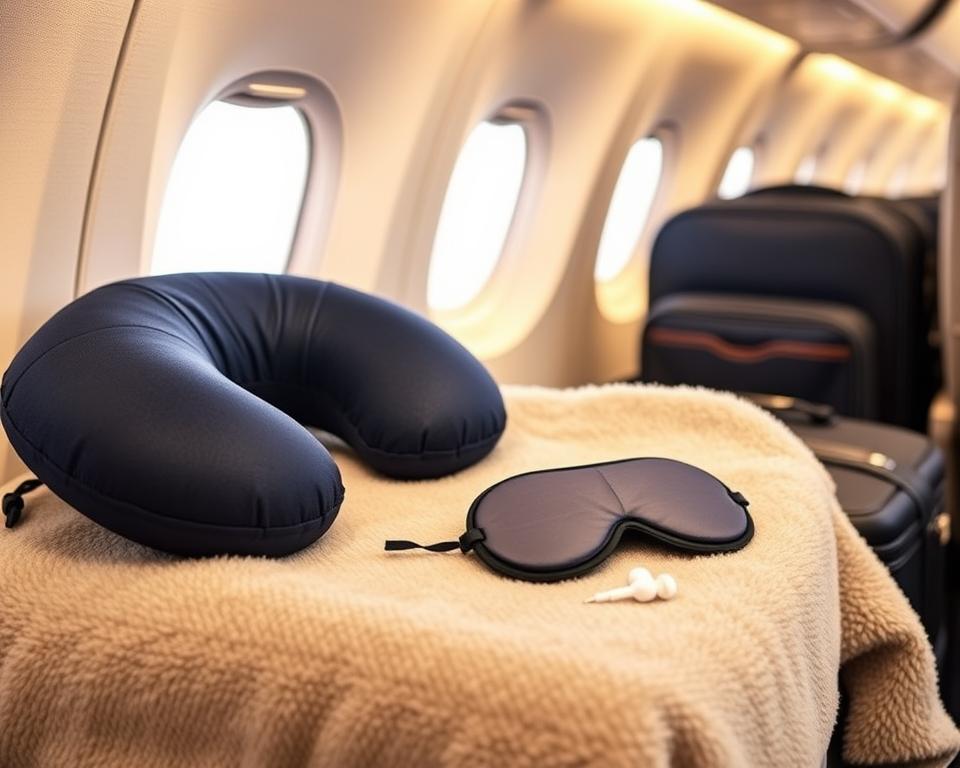
A few small items can make a red-eye flight more restful. Pack items that block light, keep you warm, and support your head, then keep them close during the flight.
Bring an eye mask and earplugs
A sleep mask can block cabin lights and nearby screens. Add earplugs or noise-canceling headphones to soften engine sounds and nearby conversations.
Add layers and neck support
Choose a supportive travel neck pillow that fits in your bag. J-Pillow and Cabeau memory foam styles offer portable options. A hoodie, warm socks, and a packable fleece blanket can help when the cabin feels cold.
Keep essentials within reach
Store water, lip balm, needed medication, hygiene items, and a small snack in your personal bag. Fill a reusable water bottle after airport security, so it is ready for the flight.
| Item | Why pack it | Where to keep it |
|---|---|---|
| Sleep mask and earplugs | Block light and reduce noise | Outer pocket of your personal bag |
| Travel neck pillow and warm layers | Support your head and help you stay warm | Carry-on or clipped to your bag |
| Water, lip balm, medication, and snack | Keep basic comfort needs close | Easy-to-reach personal bag pocket |
Choose the seat that makes sleeping easier
Your seat can shape the airplane cabin sleep environment. Think about how you sleep, how often you get up, and how easily noise or movement wakes you.
Pick a window seat for fewer interruptions
A window seat gives you a wall to lean against and lets you control light from the window. You are less likely to wake when a seatmate needs to get up. If you use the bathroom often, an aisle seat may suit you better, though other travelers may need to pass.
Seats near the galley or restrooms can bring more noise and foot traffic. The middle cabin may be quieter on some flights. Choose a spot that fits your habits and helps you return to sleep after a disruption.
Consider legroom and seat recline
Extra legroom can help you stretch, but check whether the seat reclines. Some exit-row seats have limited recline, and the door may not feel comfortable to lean against. On some planes, a button lets you move an armrest up or down for more room.
For a more restful airplane cabin sleep environment, weigh easy access against fewer interruptions and a comfortable place to lean.
| Seat choice | Potential benefit | What to consider |
|---|---|---|
| Window | Wall to lean on; control over window light | Getting up may require asking seatmates to move |
| Aisle | Easy access and room to stretch one leg | Passing passengers may disturb your sleep |
| Exit row | Often offers more legroom | May not recline; the door can be uncomfortable to lean against |
| Near galley or restroom | Convenient access | More noise and foot traffic may interrupt rest |
Eat and drink strategically before boarding
A little planning can help you settle in after the cabin lights go down. Choose foods and drinks that won’t leave you too full or restless.
Choose a light meal
Have a light meal before boarding. Heavy food can upset digestion and make sleep harder. Pack nuts, fruit, or a granola bar because overnight flights may have limited food service.
Limit caffeine and alcohol
Pay attention to caffeine timing: coffee late in the day can affect sleep. Alcohol may disrupt rest, while herbal tea can help you feel calm. Practice hydration during flights by bringing water and sipping it; dry cabin air can leave you dehydrated.
Set up a sleep-friendly space after takeoff
Once the cabin settles, make small changes that help your body wind down. A blanket, comfortable layers, and a familiar bedtime step can make your seat more restful.
Fasten your seat belt over your blanket
Keep your seat belt fastened over your blanket, with the buckle visible. This lets a crew member check it without waking you or moving your covers.
Reduce light, noise, and screen time
Use an eye mask to block cabin lights and nearby reading lamps. Earplugs or noise-canceling headphones can soften engine noise and cabin chatter. Put your screen away and try a simple wind-down step, such as using a facial wipe.
Choose options that feel comfortable and easy to manage in your seat.
| Need | Simple option |
|---|---|
| Less light | Wear an eye mask |
| Less cabin noise | Use earplugs or noise-canceling headphones |
| More warmth | Add a soft layer or blanket |
| Bedtime cue | Use a facial wipe and put screens away |
Get comfortable in an economy-class seat
Good economy-class red-eye sleep comfort starts with steady support and simple adjustments. Settle in before sleeping, so you can arrange your space without rushing.
Support your head and lower back
A neck pillow can limit head bobbing and ease neck soreness. The J-Pillow suits window-seat sleepers, while the packable Cabeau memory foam pillow offers another option. For lower-back support, place a small cushion or folded clothing layer behind your back.
Wear comfortable clothes, add warm socks, and keep a light blanket nearby. After settling in, you may rest more easily with your shoes off.
Recline when the cabin allows it
Check whether your seat reclines before settling in. Exit-row seats can provide more legroom, but some do not recline. A small recline may improve red-eye sleep comfort without taking space from the passenger behind you.
Use sleep aids carefully on a red-eye
A sleep aid may help you rest, but it may leave you groggy after landing. One traveler said an over-the-counter sleep aid helped them fall and stay asleep, but they felt tired the next day. Plan for how you’ll feel after the flight, not just during it.
Check with a healthcare professional first
Ask a healthcare professional whether a sleep aid is right for you. This matters especially if you take other medicines or have a health condition. Read and follow the product label. Good over-the-counter sleep aid safety starts with knowing how the product may affect you during and after the flight.
Avoid mixing sleep aids with alcohol
Skip alcohol if you plan to use a sleep aid. Alcohol can disrupt sleep, and mixing substances may raise safety concerns. If you are unsure what is safe for you, ask a healthcare professional before boarding.
| Before the flight | What to keep in mind |
|---|---|
| Considering a sleep aid | Ask a healthcare professional and read the product label. |
| Planning to drink alcohol | Do not mix alcohol with a sleep aid. |
| Taking a sleep aid | Allow for possible grogginess after landing. |
Wake up smoothly before landing
Give yourself time to shake off sleep before reaching the gate. A calm morning routine after a red-eye can ease your first hours in a new time zone.
Give yourself time to fully wake up
Pack travel-size toothpaste, face wipes, and deodorant in an easy-to-reach refresh kit. Keep a snack in your bag because airport shops may be closed when an early flight lands.
Use light, water, and gentle movement
Drink water and take a short aisle walk if you feel stiff or restless. After landing, get natural light, eat a nutritious breakfast, and try to stay awake until local bedtime.
| When | Simple step | Why it helps |
|---|---|---|
| Before landing | Drink water and stretch gently | Eases stiffness and helps you feel more alert |
| After landing | Get natural light and eat breakfast | Helps your body adjust to local time |
| During the day | Save naps for local bedtime | Supports a smoother time-zone shift |
Follow a simple red-eye sleep routine from boarding to landing
Build an overnight flight sleep routine around what helps you rest. Choose a seat that fits your habits, and avoid spots near the galley or restrooms when possible. Keep your sleep kit nearby with a neck pillow, eye mask, earplugs, warm layers, a blanket, water, and a snack.
After boarding, settle in and follow a familiar bedtime routine. Try meditation, slow breath counting, a few book pages, or a quiet audiobook. If sleep does not come, release the pressure to drift off; calm, passive rest beats clock-watching and worry.
Before landing, focus on what comes next. Check the airline app or seatback screen for your baggage carousel, and review airport maps for connections. Save directions to your pickup area, too; transit schedules and pickup rules vary by airport, so check them before arrival.
A steady overnight flight sleep routine can make the whole trip feel easier.




