
ADVERTISEMENT
A family of four may spend $600 to $1,000 each month on food. Costs depend on location and eating habits. One family kept grocery costs near $600 while buying fresh vegetables and a range of foods. They planned meals and used food they already had instead of chasing coupons.
A realistic grocery budget for family of four starts with your household’s needs and habits. Weekly meal planning can help you spend with purpose. It can also make household food costs easier to manage.
Key Takeaways
- Monthly grocery costs vary by location, diet, and dining-out habits.
- Planning five days of meals can make shopping more focused.
- Check your fridge, freezer, and pantry before you shop.
- Stocking up on common ingredients once a month may help control costs.
- A budget should fit your family’s routine, not depend on constant deal hunting.
What should a family of four spend on groceries each week?
A 2025 estimate sets a moderate-cost grocery plan for a family of four at $975 to $1,500 monthly. That equals about $225 to $350 each week. Other estimates for weekly grocery spending show $600 to $1,000 monthly, based on location, food choices, and dining-out habits.

Families that use cost-saving habits may spend closer to $150 to $200 per week. These figures reflect different plans, not one standard grocery budget for family of four. To manage household food costs, choose a range that fits local prices and your family’s meals.
ADVERTISEMENT
Use USDA food-plan ranges to set a realistic starting budget
USDA food plans include four levels: Thrifty, Low-Cost, Moderate-Cost, and Liberal. These levels offer a starting range for a grocery budget for family of four.
| USDA plan | Estimated monthly cost |
|---|---|
| Thrifty | $1,013 |
| Low-Cost | $1,119 |
| Moderate-Cost | $1,380 |
| Liberal | $1,668 |
These figures cover two adults and two children, ages 6 to 8 and 9 to 11. They estimate food prices rather than tracking what families spend. Your monthly grocery costs may change with location, food choices, and household needs.
Choose the plan that best fits your situation, then use it as a starting point. Because USDA figures are estimates, compare them carefully with published estimates using different dates or methods.
Decide which expenses belong in your grocery budget
Clear grocery budget categories show where your household food costs go. Review a few months of bank statements to set a realistic grocery budget.
Separate groceries from household and personal-care items
Separate food purchases from laundry soap, paper towels, shampoo, and toothpaste. These items may share a receipt, but separate tracking shows your meal costs. Set a separate amount for household and personal-care products based on your spending.
Account for food bought outside the grocery store
Track restaurant meals, takeout, and snacks bought on the go in a dining-out budget. USDA grocery estimates cover food prepared at home, not food eaten out. Separate tracking shows grocery spending and meal costs away from home.
| Expense | Examples | How to track it |
|---|---|---|
| Groceries | Produce, meat, bread, and pantry food | Record under your grocery budget |
| Household and personal care | Cleaning supplies, tissues, and shampoo | Track apart from food |
| Food eaten out | Restaurant meals, takeout, and café snacks | Record in your dining-out budget |
Adjust the budget for your family’s ages and dietary needs
A starting budget may not fit every household. USDA estimates for a family of four include two children ages 6 to 8 and 9 to 11. Household food costs can change with age, appetite, location, and dietary needs.
Use current spending as a guide, and adjust your family food budget when your household’s needs change.
Plan differently for toddlers, school-age kids, and teens
Toddlers may eat small portions, while teens often need more food as they grow. Track what your family eats over several weeks. Use these patterns to shape your family food budget instead of a fixed estimate.
Budget for allergies, medical diets, and special ingredients
Food allergies or medical diets may require special products that cost more. List these items first, compare prices, and plan meals with ingredients everyone can eat. If you receive SNAP benefits, check which foods qualify before shopping.
Factor in regional food prices and access to stores
Prices vary by region and season. A nearby store with limited choices may cost more than a larger market farther away. Compare prices for foods your family buys often, and include travel costs in your food budget.
| Family factor | What to watch | Budget adjustment |
|---|---|---|
| Age and appetite | Portions and foods left uneaten | Buy amounts that match what your family uses |
| Dietary needs | Special items and safe substitutes | Set aside room for required foods |
| Location and season | Local prices and store access | Compare nearby options and seasonal choices |
Turn a monthly grocery target into a weekly spending limit
Review grocery receipts from past months and calculate your average monthly spending. Divide it by 4.3 for a useful weekly grocery spending plan.
For example, a $125 to $150 weekly grocery budget can provide a starting target. Prices and family needs vary, so add a 5% to 10% cushion for seasonal shifts and rising costs.
One family reported spending $600 a month on groceries. That amount may not fit every grocery budget for family of four, so use recent spending to set a lasting limit.
Divide the weekly budget across food categories
Set rough limits for protein, produce, and grains before shopping. For a family of four, one estimate calls for 12 to 16 pounds of protein each week.
Each week, plan for 10 to 15 pounds of fruits and vegetables. Also plan for 8 to 12 pounds of grains or starches. These amounts can shift with age, activity, and dietary needs.
For easy weekly meal planning, build meals with protein, grain or starch, and vegetable. Try chicken thighs with brown rice and broccoli, or ground beef with pasta and tomato sauce.
Eggs, beans, rice, and pasta can turn pantry staples into affordable family meals. Scrambled eggs with toast and mixed vegetables make a simple choice for a busy night.
Plan meals around what you already have
Before shopping, take a quick look at what your family has. Set aside a few minutes for weekly meal planning, starting with food on hand to keep plans practical and cut extra spending.
Check the pantry, freezer, and refrigerator first
Check pantry staples, the freezer, and refrigerator first. Find frozen vegetables, meat, and produce you should use soon. A five-day plan takes about 15 minutes, while a longer weekend session takes 20 to 30 minutes.
Choose flexible meals that reuse ingredients
Choose five to seven dinners that share ingredients. Roast chicken or a whole chicken can serve as dinner one night, then become soup or sandwiches. Stir-fries and omelets help use vegetables before they spoil.
Build leftovers into the week
Pack extra portions for lunch, freeze them for a busy night, or plan one evening for leftovers. These habits support food waste reduction and stretch the grocery budget.
| What you have | Meal idea | How to use extras |
|---|---|---|
| Cooked chicken | Chicken dinner, soup, or sandwiches | Pack portions for lunch or freeze them |
| Vegetables nearing their best | Stir-fry or omelet | Add remaining vegetables to soup |
| Rice, beans, or pasta | Flexible pantry-based dinner | Save portions for another meal |
Create a grocery list that stays within budget
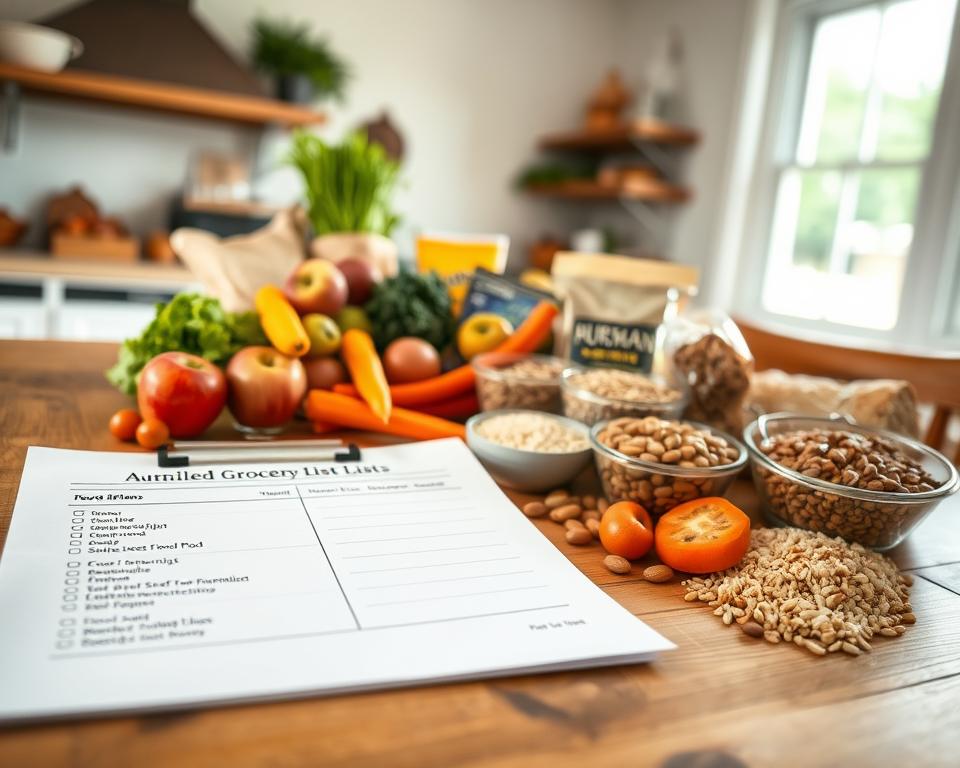
Begin with weekly meal planning and check your pantry, freezer, and fridge. Add only needed ingredients to your grocery list. This prevents duplicate purchases and connects your cart to planned meals.
Group items by store section, including produce, dairy, and canned goods. Shop one section at a time to avoid backtracking. Follow your list, and pause before buying unplanned snacks or drinks.
Keep receipts or use an app for grocery price tracking. Review your totals each week. If convenience foods, snacks, or drinks cost more than expected, adjust your next list.
| List step | What to do | How it helps |
|---|---|---|
| Check what you have | Review pantry, freezer, and fridge items | Reduces duplicate purchases |
| Plan meals | List ingredients needed for the week’s meals | Keeps shopping focused |
| Sort by store section | Group produce, dairy, and pantry items | Saves time in the store |
| Review spending | Save receipts or log totals in an app | Shows where the budget goes |
Save money while shopping without cutting meal quality
Small choices can lower your bill without making meals feel skimpy. Compare prices, plan meals your family likes, and skip deals that create waste.
Compare unit prices and choose store brands
Check unit pricing by comparing the cost per ounce or pound. A family-size pack may cost more per serving than two smaller packs. Consumer Reports figures show private-label products often cost 25% to 30% less than name brands. Store brands work well for basics like oats, canned tomatoes, and yogurt.
Use sales and coupons only for items you need
Build meals around weekly deals for foods already on your list. A quick grocery price tracking note can help you spot real savings over time. A coupon helps only when it lowers the cost of something you planned to buy.
Shop seasonal produce and lower-cost proteins
In-season produce often costs less and tastes fresh. Try eggs, beans, or lentils for one dinner each week instead of meat. These lower-cost proteins make filling meals, such as bean chili or lentil soup, without cutting meal quality.
Handle bulk buys, stock-up trips, and irregular grocery costs
Bulk buying can lower the cost per pound, especially for meat from co-ops, local farms, or wholesalers. Some wholesale boxes contain 10, 20, or 40 pounds. Compare unit prices first because a sale is no bargain if food goes unused.
Split meat into family-sized portions, label each pack, and freeze it. Bulk meat may save $100 to $200 a month for some households, but savings depend on prices and family use.
Check your freezer inventory before planning meals or making a stock-up trip. Set aside grocery budget money for planned purchases, and restock pantry staples you use often.
| Before you buy | What to do | Why it helps |
|---|---|---|
| Meat in large packs | Compare cost per pound; portion, label, and freeze. | Limits waste and makes meals easier to plan. |
| Pantry staples | Buy a larger amount only if you use it often. | Keeps storage space and spending in check. |
| Monthly stock-up trip | Check home supplies and set a spending limit. | Helps cover irregular costs without surprise spending. |
Track each shopping trip and adjust the next week’s budget
Save receipts and review spending from the past few months. This shows where household food costs are rising. Apps such as Mint, EveryDollar, and YNAB can simplify grocery price tracking.
Keep a short price list for staples like chicken, eggs, rice, and milk. This helps you spot a good deal.
Compare grocery spending with your monthly grocery budget. Keep restaurant meals and takeout in a separate category.
Set a manageable goal, such as trimming a $1,200 monthly bill by $100 next month. Review your plan every month or two because food prices can shift over time.
Keep a simple weekly grocery routine that makes spending less stressful
Set aside a regular time for weekly meal planning. Check the pantry, fridge, and freezer first, then plan meals around food you already have. A grocery budget for family of four is easier to manage when your list matches your supplies.
Choose meals for five days, and cook extra protein for another dish. Add a leftovers night each week, and choose vegetables your family enjoys. If you use SNAP benefits, include them when you calculate your grocery spending limit.
Shop with your list, then review the receipt at home. Freeze food before it spoils, move older freezer items forward, and use pantry goods first. These small habits support food waste reduction and make next week’s plan easier.




