
ADVERTISEMENT
A $900 holiday budget equals $75 each month if you save for a full year. If you start later, the monthly amount rises. Still, planned deposits can make holiday costs easier to manage.
Gifts are only part of the bill. Travel, meals, decorations, events, donations, shipping, and holiday clothes can raise your total. A holiday savings plan by month spreads these costs across the year, instead of charging them all at once.
You can start a sinking fund in July or September for the months ahead. Use a seasonal spending tracker to list expected costs and check your progress. Adjust your savings before the busiest shopping weeks.
Key Takeaways
- List gifts, travel, food, and other seasonal costs.
- Set a total holiday spending goal that fits your budget.
- Save in smaller amounts with a sinking fund.
- Use a seasonal spending tracker to monitor your progress.
- Planning early can help you avoid carrying holiday debt into the new year.
What should your total holiday budget cover?
Plan for the full season, not just gifts. Set a monthly gift budget, including taxes and shipping in your estimates. List everyone you plan to shop for, then choose an affordable limit for each person.
Use gift list budgeting to keep gifts on track. Add food, hosting, decorations, wrapping supplies, family photos, holiday clothes, donations, and school or work events. Include fun outings, such as meals out, movies, concerts, and shows.
ADVERTISEMENT
Estimate holiday travel costs, including gas, airfare, hotels, car rentals, meals, and other transportation. Set a limit for each category before spending begins. If the total feels too high, adjust your plan early.

How much should you save each month?
List expected holiday costs, including gifts, travel, food, and events. Review your income, regular bills, savings, family traditions, and other money goals. This helps set a realistic holiday savings plan by month.
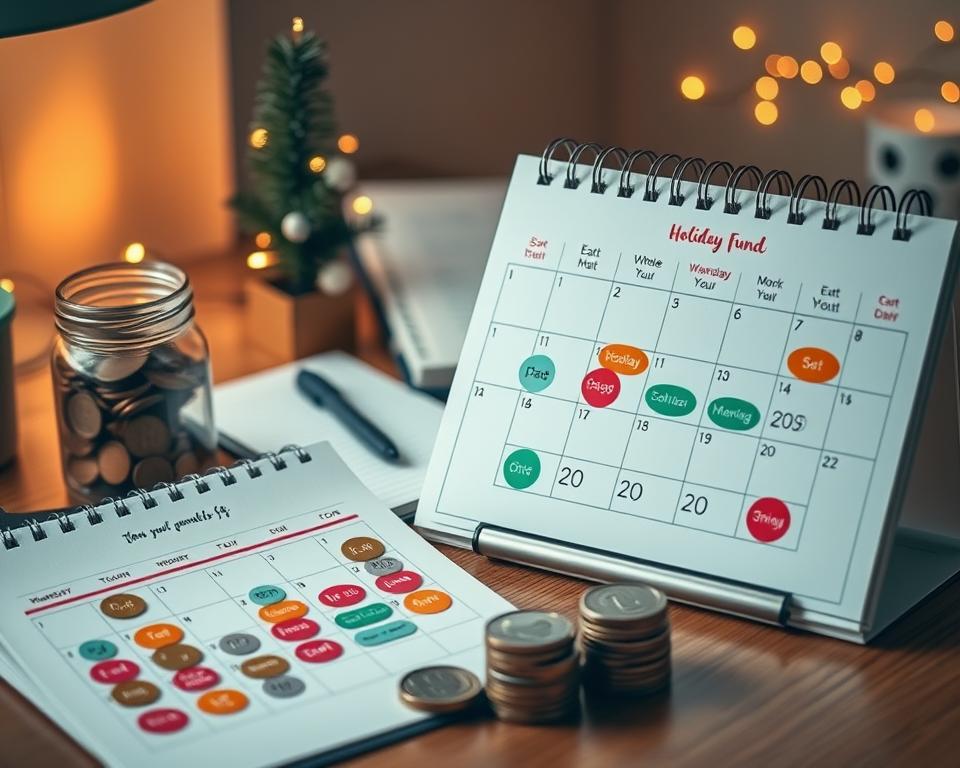
Divide the amount you still need by the months, weeks, or pay periods before spending it. For example, saving $100 from each of eight paychecks creates an $800 sinking fund. Set a monthly gift budget that fits your other holiday costs.
If the amount feels too high, lower your spending goal instead of squeezing other bills. Small, steady deposits may feel easier than one large payment at the last minute.
What to save in January, February, and March
A holiday savings plan by month can make a large goal easier to manage. Choose a spending limit, save steadily, and add costs as your plans take shape.
January: Set your holiday spending target
Review your income, debt payments, regular bills, and current savings. List likely costs, including gifts, meals, travel, and decorations. Set a total that fits your budget without using money for essential bills.
February: Automate your first contributions
Start saving now instead of waiting to see what remains at month’s end. Set up automatic savings transfers on each payday, or move less into savings each week. Choose an amount you can keep saving.
March: Add travel, food, and event costs
Estimate holiday travel costs, including airfare, gas, lodging, meals, and a rental car. Also plan for hosting, dining out, movies, concerts, or shows. Early estimates can help you adjust monthly savings before plans are set.
| Month | Main step | Costs to consider |
|---|---|---|
| January | Set a total spending target | Gifts, meals, travel, and decorations |
| February | Start regular contributions | Payday or weekly savings deposits |
| March | Estimate seasonal plans | Travel, hosting, dining, and events |
Build the fund from April through June
Spring is a good time to review your holiday sinking fund and plan for larger costs. A quick check can help keep your savings goal realistic.
April: Review your savings progress
Compare your balance with your goal. Review your income and bills to confirm planned deposits still fit. A separate savings account keeps holiday money away from daily cash and makes progress easier to track.
May: Plan for travel and larger purchases
Estimate costs for flights, lodging, and major planned gifts. Booking airline tickets and hotel rooms months ahead may help you avoid peak holiday prices. Add these estimates to your seasonal spending tracker.
June: Increase contributions if needed
If your balance is below target, divide the gap by the remaining pay periods. Raise automatic savings transfers only if your regular budget can handle them. A savings growth tool can help you find a workable monthly amount.
Increase holiday savings from July through September
Summer is a good time to check your progress and spot costs before the busy season. A holiday savings plan by month can keep you on track and help you avoid borrowing for holiday spending.
July: Start shopping for deals
Compare prices for gifts already on your list. Buy when you find a fair price, but leave room for Black Friday and Cyber Monday sales later.
August: Check gift and travel budgets
Review your gift list budgeting, and keep each purchase within its limit. Update holiday travel costs for airfare, gas, lodging, meals, and a rental car if needed.
September: Set aside money for seasonal extras
Estimate costs for decorations, shipping, clothes, donations, and holiday food. Divide your remaining savings goal across your paychecks, so each amount feels manageable.
Use October to lock in your gift budget
Finalize your gift list and set a realistic limit for each person. This gift list budgeting step gives your monthly gift budget a clear purpose and helps prevent rushed buys.
Use a seasonal spending tracker to record each purchase and check what remains in each category. Compare prices, including tax and shipping, and shop sales only for listed items. Set a firm cap for gift exchanges, and mix homemade gifts with store-bought ones to stay on track.
Finish planned purchases and save in November
Use your gift list budgeting plan and category limits for each November purchase. Record each item and its cost right away. A sale saves money only if the item was already on your list.
Continue automatic savings transfers until they cover your planned costs. If you use a credit card, track every charge and choose a repayment amount. Available credit is not part of your holiday budget, so your credit card payoff strategy must match what you can repay.
Homemade gifts, baked goods, handwritten notes, and photo gifts can feel personal without costing much. A movie night or game night can also offer a thoughtful experience.
| Planned purchase | Budget check | Lower-cost idea |
|---|---|---|
| Gift for a friend | Stay within the gift limit | Handwritten letter or baked treat |
| Family activity | Count tickets, food, and travel | Host a movie or game night |
| Personal gift | Record the cost after buying | Make a photo gift at home |
Use December for spending, not last-minute debt
Check your account balances and recent transactions while shopping. Compare each purchase with the money remaining in its category. A seasonal spending tracker helps you spot overspending before it grows.
Turn on bank and card alerts to watch charges and balances. If you use a credit card, track every purchase and follow a credit card payoff strategy you can afford. Your credit limit is not extra holiday money.
Keep holiday travel costs, meals, shipping, and events within planned limits. If one category runs high, trim another before adding charges.
| Expense | December check | Helpful action |
|---|---|---|
| Gifts | Compare purchases with the remaining gift budget. | Pause shopping when the limit is reached. |
| Travel | Review tickets, lodging, and local transit costs. | Use the amount set aside for holiday travel costs. |
| Food and events | Track meals, gatherings, and tickets. | Choose a lower-cost option if funds run short. |
| Card payments | Check charges and the amount available to repay. | Pay according to your credit card payoff strategy. |
Starting late? Adjust the monthly savings plan
Count the weeks or paychecks left before holiday costs are due. Divide your remaining expenses across that time to set a realistic weekly or monthly amount.
If it strains your budget, lower your spending target instead of taking on debt. A holiday savings plan by month can help you focus on what matters most.
Protect the traditions you value most. A smaller gathering, less travel, or fewer gifts can make a real difference. Handmade items, homemade food gifts, thoughtful small purchases, and gifts of your time can keep the season meaningful without stretching your monthly gift budget.
Members Exchange Federal Credit Union members can seek financial counseling through GreenPath Financial Wellness if budgeting or debt feels hard. MEFCU describes its Member Savings Loan as a longer-term savings and credit-building option. Loan proceeds go into a designated savings account as collateral, and on-time payments appear on the borrower’s credit report.
Listed terms include a $500 minimum, a $3,000 maximum, terms up to 36 months, and a 7.00% APR. It does not replace steady saving or a credit card payoff strategy.
Keep the holiday plan on track when spending begins
Once shopping starts, check transactions and account balances often. A seasonal spending tracker shows what you spent and what remains in each category. Keeping holiday savings in a separate account can help prevent everyday spending.
Set up automatic savings transfers before the busy season, on payday or once a week, so your fund grows steadily. MEFCU Digital Banking offers transfers, transaction review, alerts, bill payment, and account monitoring. Travis Credit Union offers budgeting tools, spending analysis, and a no-fee Target Share Account for direct-deposit savings.
After the holidays, compare your spending with your original estimates. Note which costs ran high and where you spent less. This post-holiday expense review can help you set a better savings goal for next year.




