
ADVERTISEMENT
About 1.4 billion international tourist arrivals were recorded worldwide in 2024. For first-time international travel, a simple checklist can make travel planning feel far less stressful.
Start your international travel checklist first trip well before departure, then review it several times. It can help you remember key documents, phone access, electrical adapters, and clothes suited to your destination.
Key Takeaways
- Write your checklist early and review it more than once.
- Plan for travel documents and entry rules.
- Check phone access and electrical needs.
- Pack for the weather and local customs.
- Leave time to handle any missing items.
Start your first international trip checklist six to eight weeks early
The international travel checklist first trip travelers need starts six to eight weeks before departure. Early pre-departure planning gives you time to check passport rules, visa needs, health guidance, and airline baggage limits.
Arrange travel insurance, tell your bank about your plans, and explore an international phone plan. Download offline maps and flight entertainment before leaving. If needed, arrange pet or house sitting, and share your itinerary with someone you trust.
Use a simple timeline for international trip preparation. A few tasks each week can make the final days feel less rushed.
ADVERTISEMENT
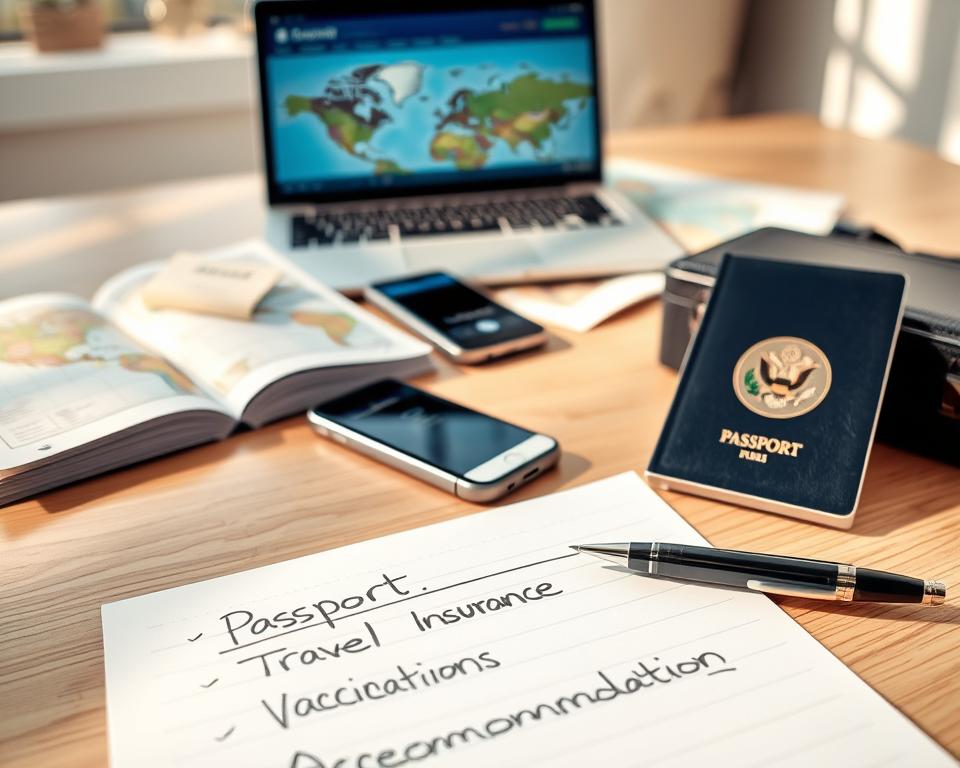
| When | What to do |
|---|---|
| Six to eight weeks before | Check passport expiration, blank-page rules, visa requirements, and health guidance. |
| Three to five weeks before | Review baggage limits, compare phone options, buy travel insurance, and notify your bank. |
| One to two weeks before | Download offline maps and entertainment, arrange home or pet care, and share your itinerary. |
Check your passport, visa, and entry requirements
Before booking activities, check the entry requirements for your destination and each country where you connect. Rules vary by country, so review them early and keep key travel records nearby.
Confirm your passport’s validity and blank pages
Check the passport validity requirements for every country on your route. Some destinations require passports to stay valid for at least six months after your travel dates. Others have different rules, so check how many blank pages you need.
Find out whether you need a visa or travel authorization
Visa rules depend on your destination, trip length, and reason for travel. If you need a tourist visa application, gather documents and get approval before departure. Save a digital copy of your visa or travel authorization.
Save proof of onward travel and accommodation
Some destinations ask for proof of onward travel, lodging, or both. Keep your flight details and accommodation confirmations together in a phone note or Google Doc. Include addresses and confirmation numbers, and carry a printed backup.
| Travel record | What to check or save |
|---|---|
| Passport | Expiration date and required blank pages |
| Visa or authorization | Application status, approval, and a saved copy |
| Onward travel | Ticket or itinerary showing your next destination |
| Accommodation | Booking address and confirmation number |
Complete health preparations before you leave
Check vaccine advice and destination health requirements when you book your trip. Some vaccines require multiple doses, so ask your doctor or travel clinic about timing.
Check recommended and required vaccines
Review the vaccines recommended or required for your destination. Keep vaccination records with your travel papers because officials may request them during your trip.
Refill prescriptions and pack medical documents
Refill regular medicines before you leave. Pack them in their original labeled containers, bring extra for delays, and keep them in your carry-on. Carry prescription documents, including a copy of each prescription, and bring a doctor’s note for essential or controlled medicine.
Check prescription medication rules before packing. Some drugs legal in the United States face strict limits abroad. Adderall, for example, may be prohibited or tightly restricted in Japan, South Korea, and the United Arab Emirates.
Learn how to get medical care at your destination
Save your health and travel insurance contact details, and learn how to reach local medical care. Pack a small first-aid kit with pain reliever, motion-sickness medicine, bandages, antibiotic ointment, and hand sanitizer. Add destination-specific medicine when a health professional advises it.
Book flights, accommodations, and airport transportation
Compare flight times, layovers, and airport locations before making flight reservations. Check airline baggage limits, especially on smaller regional flights, because size and weight rules can differ.
Keep flight, hotel, train, and rental-car details in one itinerary. Save confirmation numbers and hotel confirmations on your phone. Carry a printed copy in case you lose access to your device.
For a rental car, bring your driver’s license. Check whether your destination requires an International Driving Permit. Add the pickup location and address to your itinerary, so you can find them on arrival.
| Booking detail | What to save | Why it helps |
|---|---|---|
| Flights | Confirmation number, flight times, and baggage rules | Makes check-in and airport planning easier |
| Accommodation | Hotel confirmations and full address | Helps you reach your lodging after arrival |
| Ground transport | Train or rental-car booking, pickup point, and required documents | Clarifies where to go and what to bring |
Build a trip budget and plan how you’ll pay
Set a daily limit for food, transit, and activities. Check typical prices at your destination, and save room for treats or surprise costs. A currency-conversion app helps you compare prices while traveling.
Estimate daily spending for meals and activities
List expected daily costs, including breakfast, museum tickets, and local transit. Add a small cushion for changing plans. Check your card’s international transaction fees before travel because charges can add up.
Carry backup payment methods and some local currency
Bring a credit card and a debit card. A card with no foreign transaction fees can lower costs. Keep a backup credit card away from your wallet, and carry emergency U.S. cash, as Rick Steves recommends.
Cash helps in small towns and remote areas, even when cards work for most purchases in major cities. For foreign currency exchange, order local currency through your bank, or use an ATM or bank after arrival. Airport exchange counters often offer the worst rates.
Buy travel insurance and share your itinerary
Before you leave, compare travel insurance coverage for trip delays, cancellations, and medical emergencies. Read the policy’s limits and exclusions to understand what it covers.
Trip cancellation insurance may repay prepaid costs when a covered event disrupts your plans. Check if emergency medical coverage includes care abroad and medical transport. Save the insurer’s contact details with your other travel documents.
Share your itinerary, flight details, and accommodation addresses with someone you trust. Tell them how to reach you and when you plan to check in.
| What to prepare | Details to keep |
|---|---|
| Insurance | Policy number, insurer’s phone number, and claim instructions |
| Trip plans | Flight dates, routes, and booking details |
| Accommodations | Hotel or rental names, addresses, and reservation dates |
| Check-ins | Expected check-in times and a reliable way to contact you |
Pack the essentials for your first trip abroad
A thoughtful international packing checklist helps you prepare for delays, changing weather, and airport rules. Use a carry-on packing list to keep flight essentials close by.
Keep passports, medications, and valuables in your carry-on
Put your passport, travel documents, essential medication, and valuables in your carry-on, not checked luggage. Keep medicine in its original container, and bring prescription documents. Pack a change of clothes, underwear, and basic toiletries if your checked bag is delayed.
Pack clothing for the weather and local customs
Choose clothes for the forecast, planned activities, and local customs. Layers, broken-in walking shoes, and rain gear can keep you comfortable. Lightweight fabrics often dry faster than heavy denim.
Pack a swimsuit if you expect to use one. Bring the right electrical adapter. Check whether your hair tools support dual voltage.
Check airline baggage and liquid restrictions
Before packing, review current airline rules and airport security screening limits. Carry-on liquids, gels, and lotions must use containers of 3.4 ounces or less. Pack larger containers in checked luggage.
An empty reusable water bottle can pass through security for filling later. TSA-approved locks let security agents open checked bags with a master key.
| Item | Where to pack it | Helpful check |
|---|---|---|
| Passport and travel documents | Carry-on | Keep them easy to reach |
| Medication | Carry-on | Use original containers and bring prescription records |
| Liquids and toiletries | Carry-on or checked bag | Carry-on containers must be 3.4 ounces or less |
| Clothing and shoes | Carry-on and checked bag | Choose for weather, activities, and local customs |
Prepare your phone, internet access, and travel apps
Set up your phone before leaving so you can find directions and contact your hotel. Check your carrier’s international options and device compatibility.
Set up an international phone plan or eSIM
Ask your provider about costs and coverage. A roaming data plan is easy to use, but check its daily fees. An international eSIM from providers such as Holafly or Airalo offers another option; confirm your phone supports eSIMs first.
Download offline maps, translation tools, and reservations
Save offline travel maps in Google Maps while using Wi-Fi. Download a translation app, then save hotel addresses, booking details, and confirmation numbers for quick access.
Download movies, music, or books before your flight. Check your destination’s outlets and pack a compatible adapter. Review voltage needs before plugging in hair tools or other high-power devices.
Know what to expect at the departure airport
Keep your passport, boarding pass, and other airport travel documents in your personal item or carry-on, never checked luggage. Before leaving home, check your airline’s baggage limits, especially when your trip includes a regional flight.
For airport security screening, pack carry-on liquids in containers under 3.4 ounces. Empty your reusable water bottle before reaching the checkpoint, and keep a pen handy in case you need to fill out customs forms.
Make a long flight more comfortable with downloaded entertainment, headphones, a charged power bank, and your empty water bottle. Refill it after security, when you find a water station.
Prepare for immigration, baggage claim, and customs
Keep your passport, visa, and other immigration documents easy to reach. Before leaving, check your destination’s entry rules and learn whether you need a customs declaration form. Some countries use paper forms, while others accept online forms.
Save your lodging address and itinerary offline, and carry a pen for paperwork on the plane. For lost luggage preparation, pack essential medication and a change of clothes in your carry-on. An Apple AirTag in each checked bag can help you track its location.
Use practical safety habits while traveling abroad
Improve travel safety abroad by keeping paper or secure digital copies of your passport and other key documents. Document backups can speed replacement when you lose an original. Store your travel insurance contact details where you can find them quickly.
Before choosing a money belt or anti-theft wallet, research pickpocketing risks at your destination. Keep a backup credit card in a separate place, and use secure payment methods when shopping or dining.
Set up phone service before departure. A working phone helps with maps, calls, and travel updates when plans change.
Complete a final pre-departure check the day before you leave
Use your final travel checklist to review your bags and travel documents. Make sure your passport is packed and meets your destination’s validity and blank-page rules. For your passport and visa check, confirm your visa or travel authorization, flight details, lodging address, and reservation numbers.
Pack prescriptions in their original labeled containers, along with copies of prescriptions and any doctor’s note you may need. Check that your phone plan or eSIM works, then download maps and entertainment for offline use. Recheck airline baggage limits and carry-on liquid rules before zipping your bags.
As part of your international departure preparation, set aside your payment cards and some local currency. Share your itinerary with someone you trust, and confirm any pet or house-sitting plans. A quick review now can make departure day calmer and easier.




